Introduction
This should have been a 7S. That simple. But it's complicated. Too complicated perhaps for Apple as we used to know it.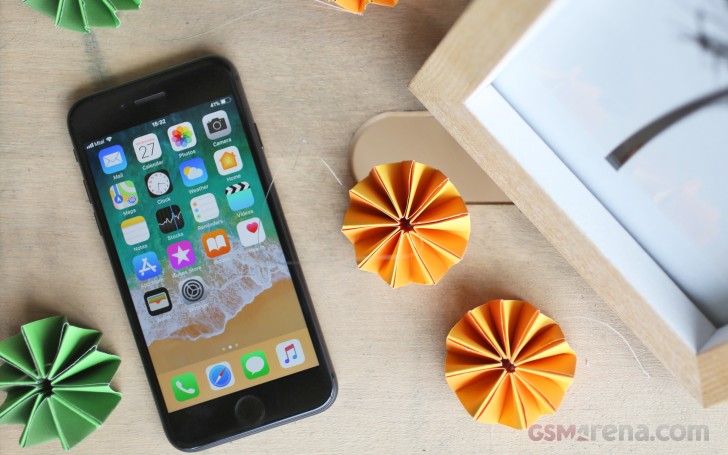
A new chipset with an extra couple of processor cores and the first in-house GPU, an all-glass body, a superior camera. Any other year, those sorts of things would've made a perfectly acceptable S upgrade. You know what we mean, we've all been there. Apple tells everyone it's hard to believe how much has changed. Pretty much everyone eventually agrees on the hard-to-believe bit. Some hundred-million-units-sold later, we're back at step 1.
It used to be that simple. Well, not anymore. Apple is in fast-forward mode and skips straight to number eight.
So, there we are. The iPhone 8 is out with an all-glass design, the powerful new chip, the improved camera and, at long last, wireless charging. The True Tone support for the display is duly noted. The doubled base storage and Bluetooth 5 support are welcome additions as well. But it's all iterative, as you'll notice reading the specs below.
Apple iPhone 8 key features
- Body: Aluminum 7000 frame, reinforced glass front and rear, IP67 certified for water and dust resistance. Gold, Space Gray, and Silver color options.
- Screen: 4.7" 16M-color LED-backlit IPS LCD screen of 750p resolution, 326ppi, True Tone adjustment via four-channel ambient light sensor, wide color gamut, 3D Touch.
- OS: Apple iOS 11.
- Chipset: Hexa-core (2 Monsoon + 4 Mistral) 2.09GHz Apple CPU, tri-core Apple GPU, 2GB of RAM, Apple A11 Bionic SoC.
- Camera: 12MP camera with F/1.8 lens, optical image stabilization, quad-LED flash with slow sync, phase detection auto focus, wide color capture.
- Video recording: 2160p@60/30fps, 1080p@30/60/120/240fps video recording
- Selfie: 7MP F/2.2 front-facing camera with BSI sensor and HDR mode, 1080p@30fps video
- Storage: 64GB or 256GB of built-in storage.
- Connectivity: 4G LTE Cat.12; Wi-Fi a/b/g/n/ac; Bluetooth 5.0; Lightning port; GPS with A-GPS, GLONASS, GALILEO, QZSS; NFC (Apple Pay only).
- Battery: 1,821mAh battery, wireless charging (Qi compatible).
- Misc: Stereo speakers, pressure-sensitive Home key with fingerprint scanner, Taptic Engine.

Main shortcomings
- Poor screen-to-body ratio (too much bezel for the size)
- No 3.5mm audio jack (ships with a Lightning to 3.5mm adapter)
- No microSD slot
- iTunes is still required for manual music upload
- No fast charger provided in the box (and the optional one is expensive)
- Video camera still recording mono audio only.
Design
One look and you know it's an iPhone. Whether it's a glass or metal at the back, the signature design is sticking around for a fourth consecutive, though probably final, year. Overused though it may be, it still has the sort of appeal that draws millions of returning users around the world.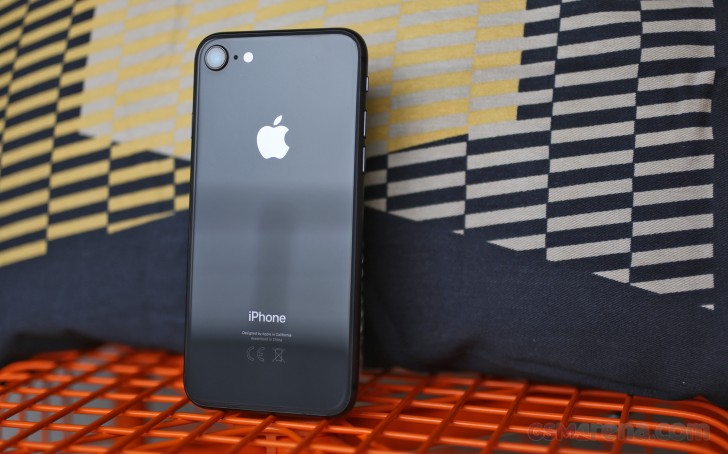
Yes, Apple was among the first to introduce a dual-glass chassis with the iPhone 4 and yes, it's among the last to put it back in circulation. The long overdue redesign has finally enabled wireless charging getting rid of the antenna strips in the process.
The iPhone 8 is a familiar sight head on. Relatively big bezels for the screen in between and the signature Home key with Touch ID. The glass is said to be tougher than before but it's not something you can spot, so nothing has really changed at first glance.
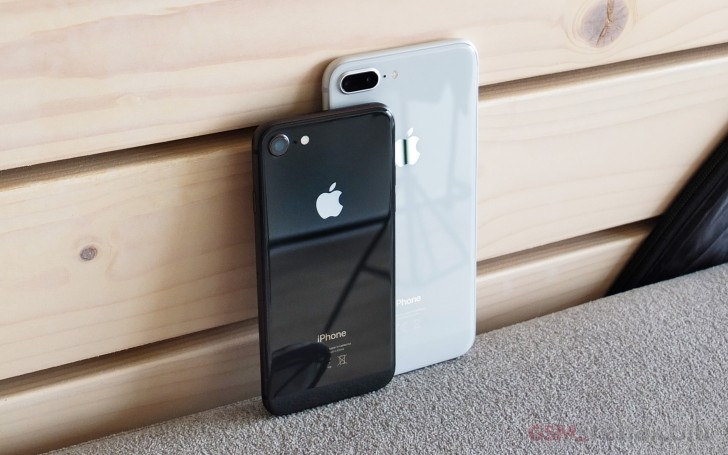
Flipping the iPhone 8 over you are already in new territory. The full glass back is gorgeous in spite of somewhat washed out black paintjob. Whether it was an intentional effect, or a failed experiment, the new Space Gray is nothing like the old one. We actually like it but think it won't be everyone's cup of tea.
Both sheets of glass have subtle curves but end rather sharply into the aluminum frame. This boosts the grip without hurting the looks. It also (probably) makes it easier to apply screen protectors.
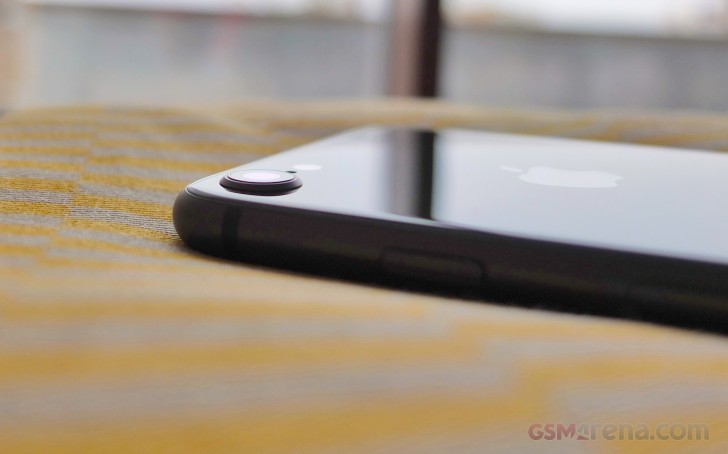
The frame is made of rigid Series 7000 aluminum with a sort of sandblasted finish giving it some scratch and fingerprint resistance. The two glass panels are secured along the edges with the frame supposed to absorb some of the shocks of impact.
As various drop tests have revealed, the iPhone 8 series isn't as tough as Apple is making it out to be. It's not that the 8 is more fragile than the competition, it's just the wrong impression you may get from Apple's publicity. The 8 is a glass phone after all, and it will crack or break if you drop it hard enough, simple as that. The glass on both sides didn't live up to the scratch-resistance promise either - small objects of metal (like the camera of another iPhone) can leave prominent enough marks. At least the oleophobic coating seems to be efficient against smudges, compared to other glass smartphones.
Back to the rear panel, the new 12MP sensor is sitting behind the same f/1.8 lens and is accompanied by a quad-LED dual-tone flash now capable of slow sync. It's bulging, alright, just as it was on the 6 and 7 series. If you put a case on it, it gets leveled out nicely
Device overview
Above the 4.7" display, the earpiece also acts as one in a pair of stereo speakers, the FaceTime camera and a couple of sensors also around.Below the screen is the 3D Touch-enabled Home key complete with a fingerprint sensor.
The silent switch and the volume controls are on the left side as always, while the power key and the SIM slot are on the right.
There is nothing on top of the iPhone 8. The bottom has the Lightning port, the mouthpiece, and the second speaker.
Finally, the 12MP camera sensor is bulging at the back. The quad-LED flash is next to it.
Comments
Post a Comment